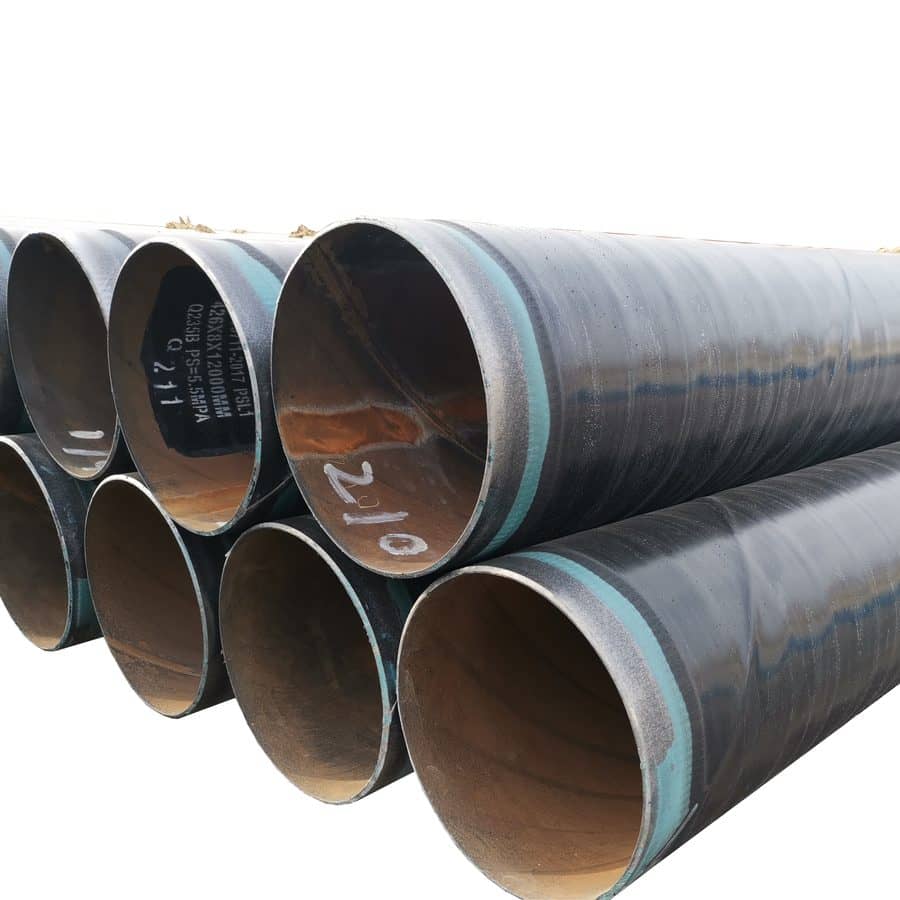
3PE is not 'another coat of paint'. Three layers do three jobs: the fusion-bonded epoxy primer bonds chemically to the steel and delivers adhesion and cathodic disbondment resistance; the adhesive tie layer joins the polar epoxy to the non-polar polyethylene; the polyethylene top coat provides mechanical protection and impermeability.
The weak point is always the interface. If blast cleaning grade and anchor profile are short of specification, epoxy adhesion drops and the coating can disbond in sheets later, so blast grade and anchor depth must be recorded batch by batch.
Field joint closure is the life-limiting step. The pipe body gets its three-layer system in the plant; the joint has to be made on site, usually with a heat-shrink sleeve. Poor cleaning, preheat or temperature control at the joint becomes a water ingress point within a few years.
Holiday detection is the cheapest inspection you can buy. Do it on the pipe body and on every joint, mark and repair on the spot; it is two orders of magnitude cheaper than digging the line up later.
Mind the temperature when selecting. Standard 3PE is for ambient buried service; for higher operating temperatures confirm the rating of the adhesive and polyethylene, or the layers will soften.
Tell us the medium, diameter and design pressure — our engineers will answer with a specification, not a brochure.